
Get More Value from the Digital Services Your Employees Depend On
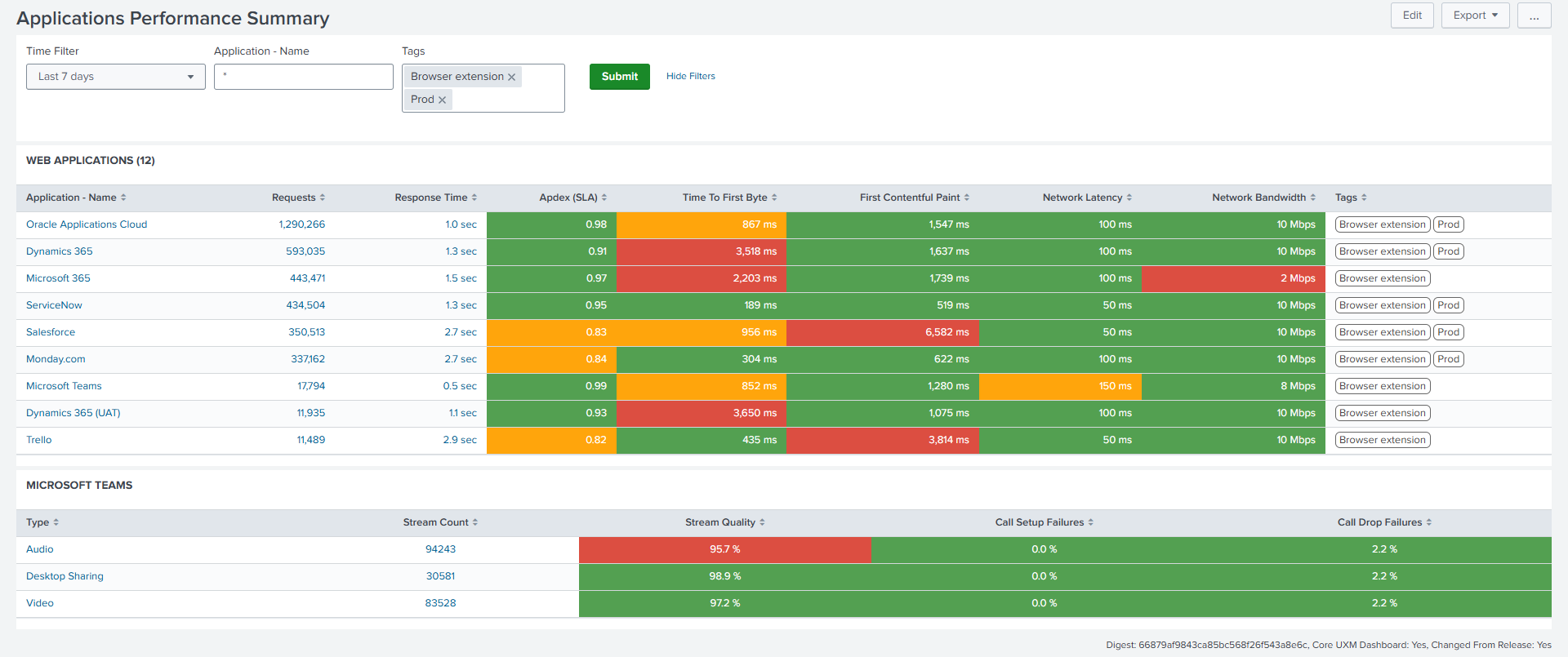
Organisations increasingly rely on external providers to deliver the technology employees use every day. A finance team may work on a SaaS platform, access it through a managed virtual desktop, and depend on an outsourced network service to stay connected. Each provider manages part of the environment, but employees experience the result as one digital workspace.
When work slows down, it can be difficult to tell which part needs attention. The SaaS provider may report that its service is available, while employees still wait for documents to open. A virtual desktop may connect successfully but respond poorly once work begins. Meanwhile, a service the organization pays for may see little use because employees encounter errors or return to familiar tools.
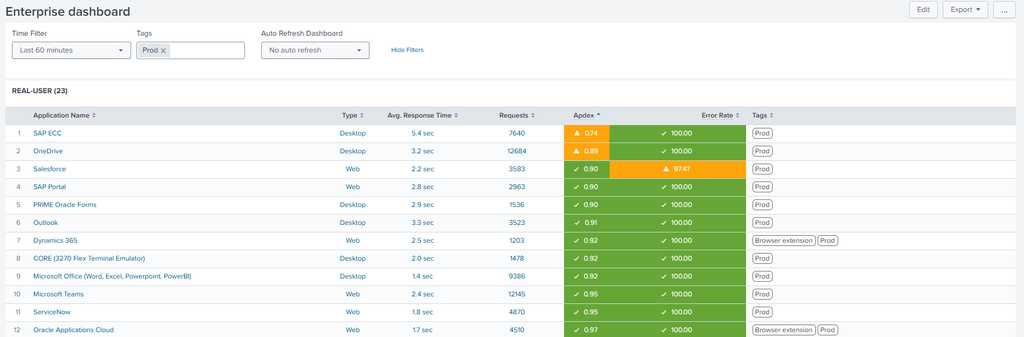
To manage these services well, IT needs to understand both how they perform for employees and whether employees use them for their intended work. UXM brings usage and real-user performance insights together with endpoint, network, and virtual-session conditions. This helps organizations investigate disruption across supplier boundaries and assess the value of the services they purchase.
See the Experience Beyond Your Own Systems
Outsourcing a service changes who operates it. It does not change the organization’s need to understand the experience its employees receive.
Internal monitoring may show that an employee’s laptop is healthy, but it cannot answer every question about an externally delivered application. Equally, a supplier’s availability report may show no outage while an important task remains slow or unreliable for employees in a particular office.
UXM helps IT examine supported SaaS services, business applications, and DaaS environments from the employee’s perspective. By connecting application behaviour with endpoint, network, and virtual-session evidence, teams gain a view of the working conditions surrounding a problem – even when they do not operate every component themselves.
That wider view matters because an employee’s task often crosses several services. Understanding each component separately is useful; understanding how they perform together gives IT a better basis for action.
Find Where Performance Deteriorates
Consider an outsourced invoice system that becomes slow each afternoon. Employees can log in, and the provider reports that the service is running. Yet opening invoices repeatedly interrupts the finance team’s work.
UXM can help IT examine the affected activity, including response times, errors, users, locations, and periods of degradation. Teams can then compare those findings with endpoint, connectivity, and virtual-session conditions.
If the delays occur mainly in one office, local connectivity may need investigation. If employees across locations and devices experience the same slow activity, the evidence may support a focused discussion with the application provider. If the application is accessed through DaaS, session responsiveness or resource pressure may also be relevant.
These comparisons help narrow down contributing factors without assuming at the outset that a particular supplier is responsible. They give internal specialists and providers a shared description of what employees experience and where to investigate next.
Connect Performance with Adoption
A service can perform well yet remain underused. Another can be widely used because employees have no practical alternative, despite persistent delays. Usage and performance need to be considered together to understand the value of either service.
Suppose an organization has purchased access to a new SaaS planning tool, but one department continues using spreadsheets. Usage data reveals the adoption gap. Performance evidence can help determine whether that department also experiences slow responses or recurring errors. Conversations with employees can then establish whether the barrier is technical, related to training, or a mismatch with the intended workflow.
The same thinking applies to a managed virtual workspace. A login shows that an employee accessed it; it does not show whether the session was responsive enough for the work it was meant to support. Consistent use may reflect a required setup rather than a satisfactory experience.
UXM’s usage and performance insights help teams identify where to investigate. A service that performs reliably but sees limited relevant use may need clearer guidance, a workflow review, or a licence adjustment. Where poor performance discourages use, resolving the technical issue should be part of the adoption plan.
Make Supplier Discussions More Specific
Supplier reviews are more productive when they are grounded in the activities employees need to complete.
Instead of reporting that “the application is slow,” IT can bring evidence about the affected activity, its response times or errors, when the issue recurs, and which employee groups experience it. Endpoint, network, and session context helps the supplier understand what has already been investigated.
Organizations can use these findings to agree on an investigation and corrective action, then check whether the change improves the employee experience. Performance expectations for important workflows and clear ownership across internal teams and providers make that process more consistent. Any contractual assessment should use the service definitions and measurement methods agreed with the supplier.
UXM supports this evidence-based approach to supplier management. It helps organizations follow an issue from the employee’s experience through escalation and improvement, rather than relying only on availability figures or isolated complaints.
Decide Whether the Service Delivers Value for Its Cost
A subscription or outsourcing contract is an investment in work the service is expected to support. Before renewal, organizations need to consider whether employees use it as intended and whether its performance meets their needs.
A heavily used SaaS application with recurring delays may call for supplier remediation before further investment. A reliable service with limited adoption may benefit from targeted support or a review of licence allocation. Repeated problems in a DaaS environment may warrant a configuration review, a supplier improvement plan, or closer examination of the service tier.
UXM provides performance and usage evidence for these decisions. IT leadership and procurement can assess that evidence alongside expenditure, employee feedback, and business requirements when considering renewals, upgrades, licence changes, or alternatives. Monitoring data alone does not establish financial return, but it makes the quality and use of a purchased service visible.
After a supplier update, training initiative, or service change, teams can compare relevant working periods to see whether response times, errors, and usage changed as intended. That closes the loop between the investment decision and the experience employees actually receive.
Manage the Whole Workspace, Including What You Outsource
Employees depend on SaaS platforms, business applications, virtual workspaces, devices, and connections working together. An organization may outsource parts of that environment, but it still needs to understand whether the combined experience supports daily work.
UXM helps IT connect performance and adoption across the employee workspace. That evidence supports faster investigation, more focused supplier discussions, better adoption decisions, and a clearer assessment of whether third-party digital services justify their ongoing cost.
More from the Blog
TURN INSIGHTS INTO ACTION
See UXM in action
UXM brings performance, health, and usage data together so you can make confident decisions across your digital workplace.
Fast deployment
•Real-world data
•Confident decisions